Sleep apnea treatment that starts with your airway
Tired of waking up tired? Dr. Jeff Buxton (Diplomate, American Sleep & Breathing Academy) works in coordination with sleep testing and your physician to look for what may be narrowing your airway, then builds a plan around the root cause.
★★★★★4.9 on Google · 270+ Toothpillow reviews · Dr. Jeff Buxton, DMD
Eight hours in bed. Still exhausted.
Maybe your partner has moved to the guest room. Maybe you wake up with a headache, lean on coffee all afternoon, and lose words mid-sentence. You've probably been told it's stress, age, or just the way you sleep.
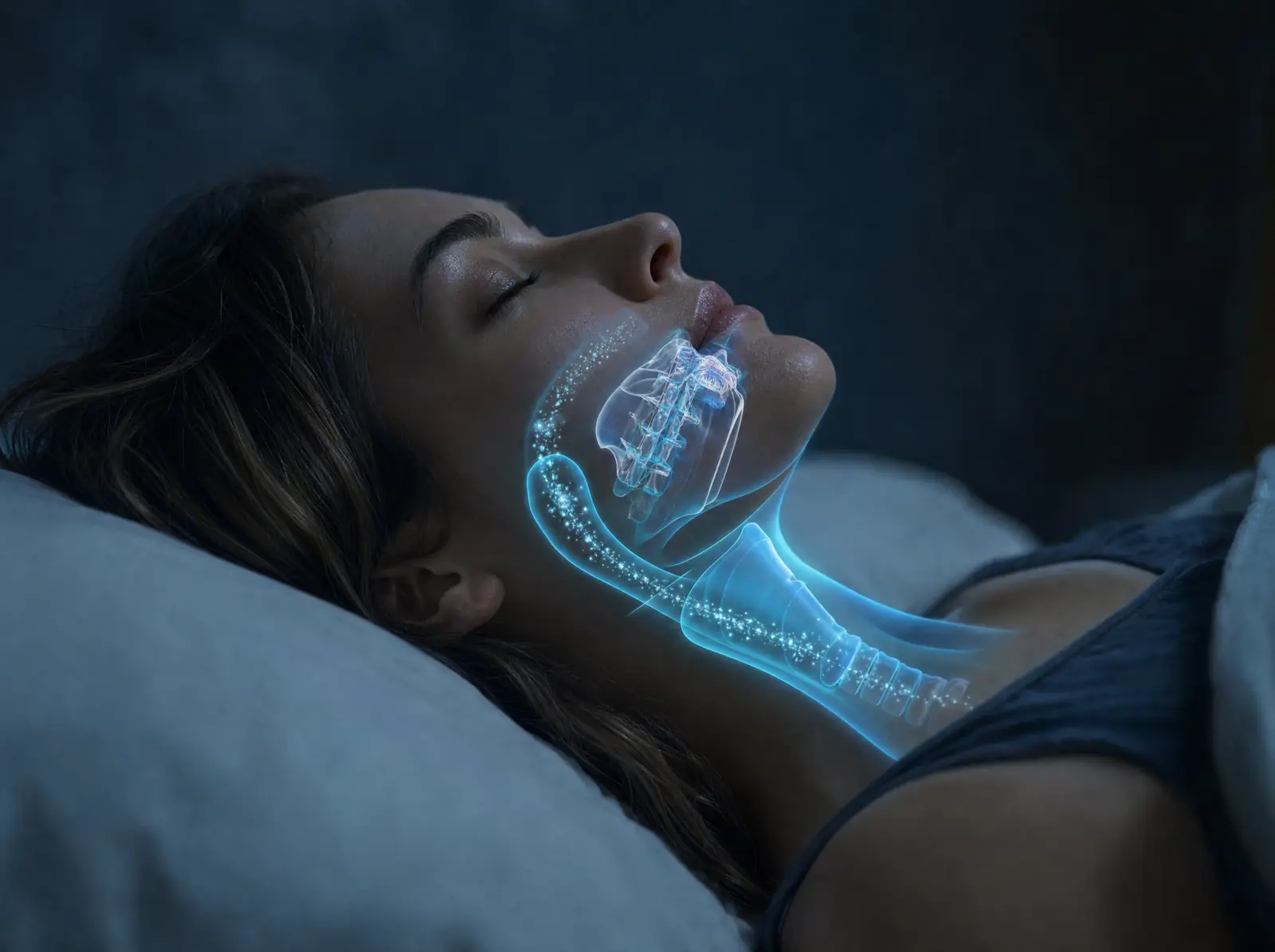
Here's what we look at: the size and shape of the space you breathe through. A narrow upper jaw, a tongue with nowhere to rest, or soft tissue that relaxes at night can all crowd the airway while you sleep. When breathing gets restricted, sleep can fragment, and many people feel it the next day.
Obstructive sleep apnea is a medical diagnosis made with proper sleep testing. Our role at Toothpillow Breathing & Sleep Center in Draper is the airway side of the story. We treat in coordination with your sleep results and your physician, and we look for the structural reasons behind your symptoms.
Signs a sleep and airway evaluation may help
None of these confirm sleep apnea on their own. Together, they're worth a closer look.
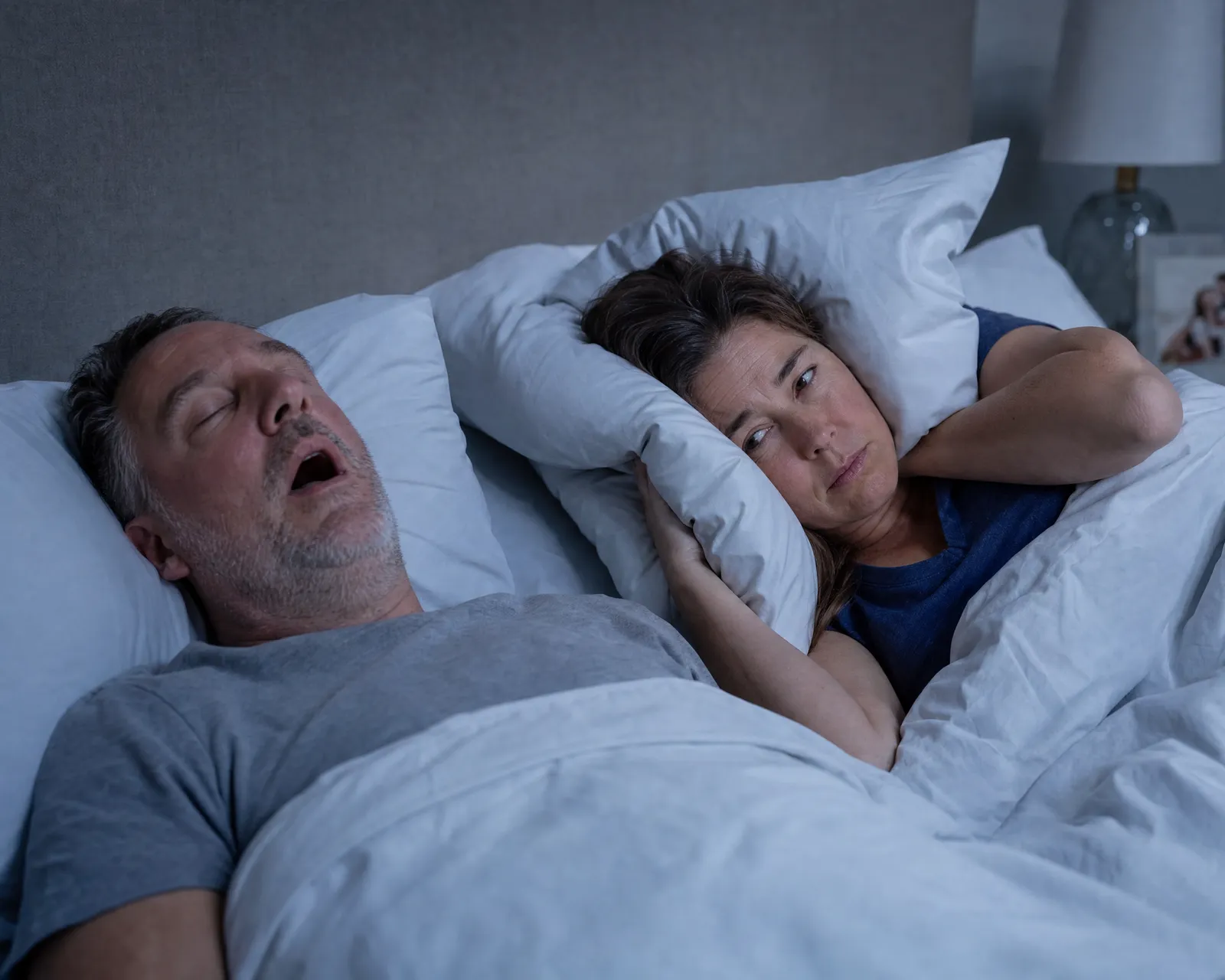
Loud or nightly snoring
Your partner hears it, jokes about it, or has stopped sleeping in the same room.
Waking unrefreshed
A full night in bed, and you still wake up feeling like you barely slept.
Morning headaches
Headaches that show up when you wake and fade as the day goes on.
Pauses or gasping
Someone has noticed you stop breathing, choke, or gasp while you sleep.
Brain fog and daytime sleepiness
Trouble focusing, afternoon crashes, or nodding off whenever you sit still.
CPAP struggles
You were prescribed CPAP and can't make it work night after night. You have options to explore.
It all starts with an airway consultation
Before anyone talks treatment, we get the full picture. Your consultation with Dr. Buxton includes:
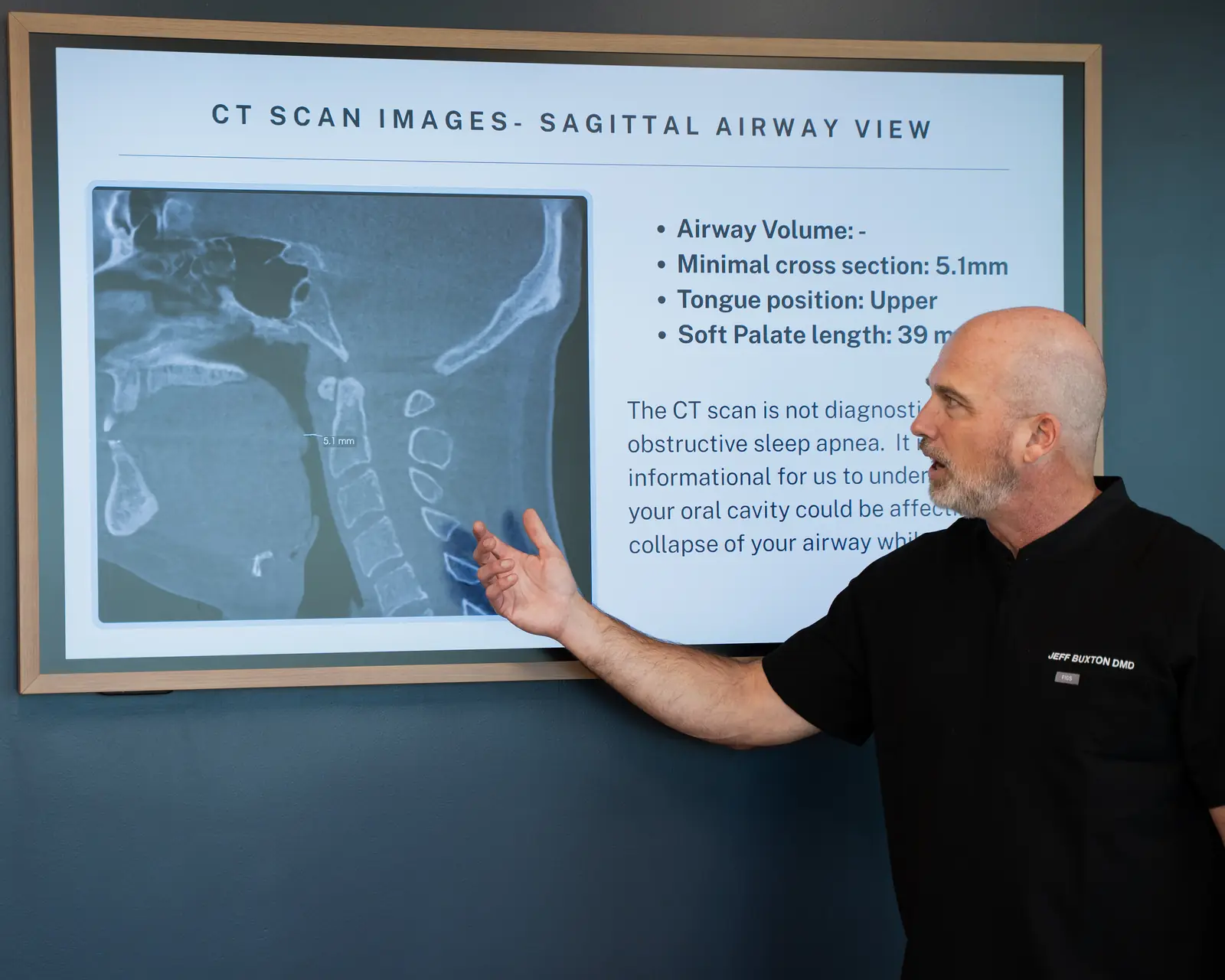
- A 3D CBCT scan of the airway, jaws, and joints
- A digital intraoral scan (no goopy molds)
- Photos and a hands-on exam of breathing, tongue, and bite
- A plain-language walkthrough of what we see and what your options are
Airway consultation: {$350 for kids and adults}
We measure your sleep and see your airway in 3D
Most adults start with a sleep test. Our at-home sleep ring records your night in your own bed, and if you need a diagnosis, we refer you to a sleep physician we work with (or one of your choice). Already had a sleep study? Bring it with you.
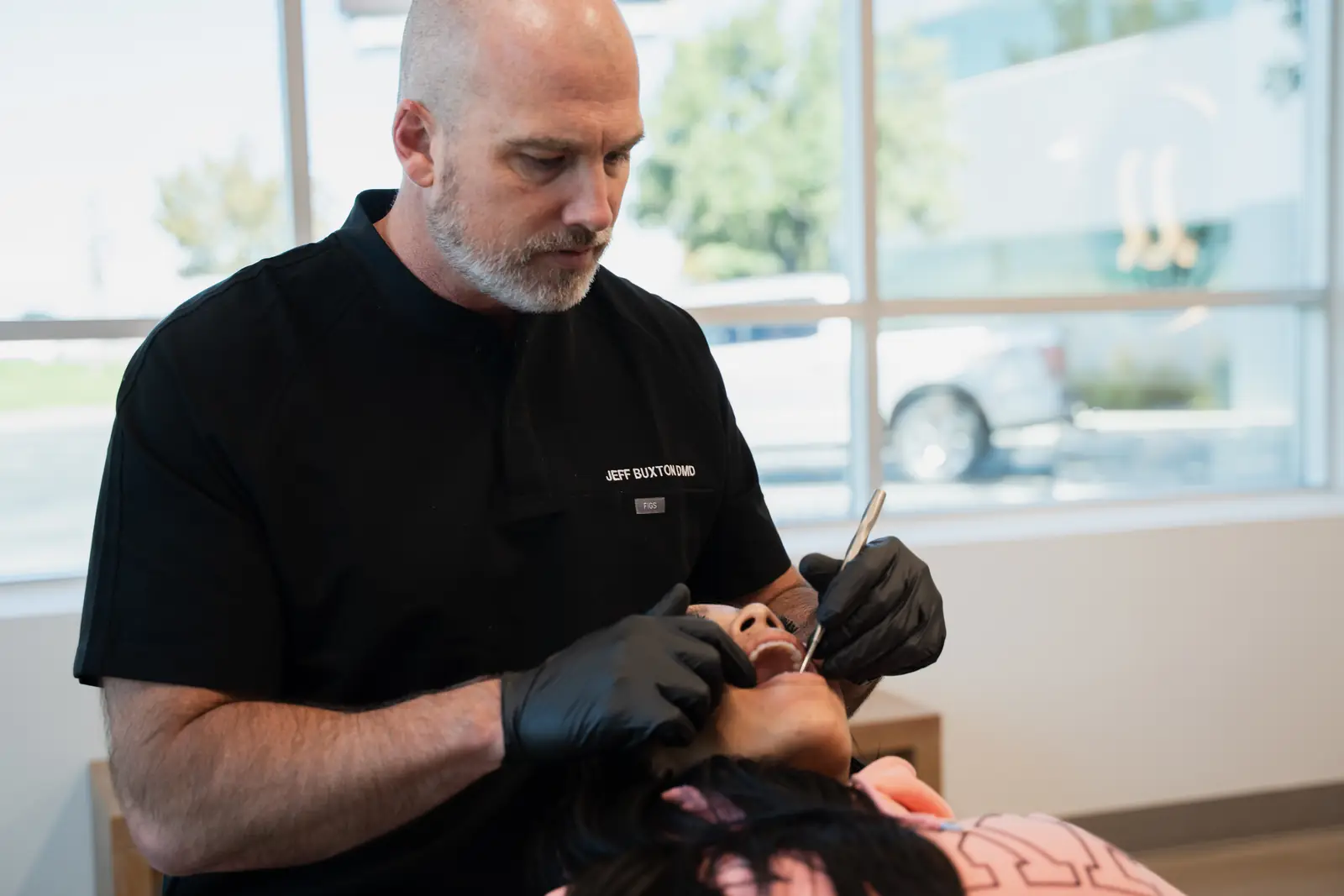
Your adult airway consultation gives Dr. Buxton the rest of the picture:
- A 3D CBCT scan of your airway, jaws, and nasal passages
- A digital intraoral scan of your teeth and bite (no goopy molds)
- Extraoral photos and a hands-on exam of your tongue, palate, and jaw joints
- A review of your sleep data and health history
You'll sit down with Dr. Buxton, look at your own scans, and leave with take-home materials that explain what we found.
Our adult airway protocol, step by step
Every plan is individual, but most adult airway cases here follow this order.
Sleep test first
We start with data. Your sleep results, reviewed with the appropriate medical provider, guide every decision that follows.
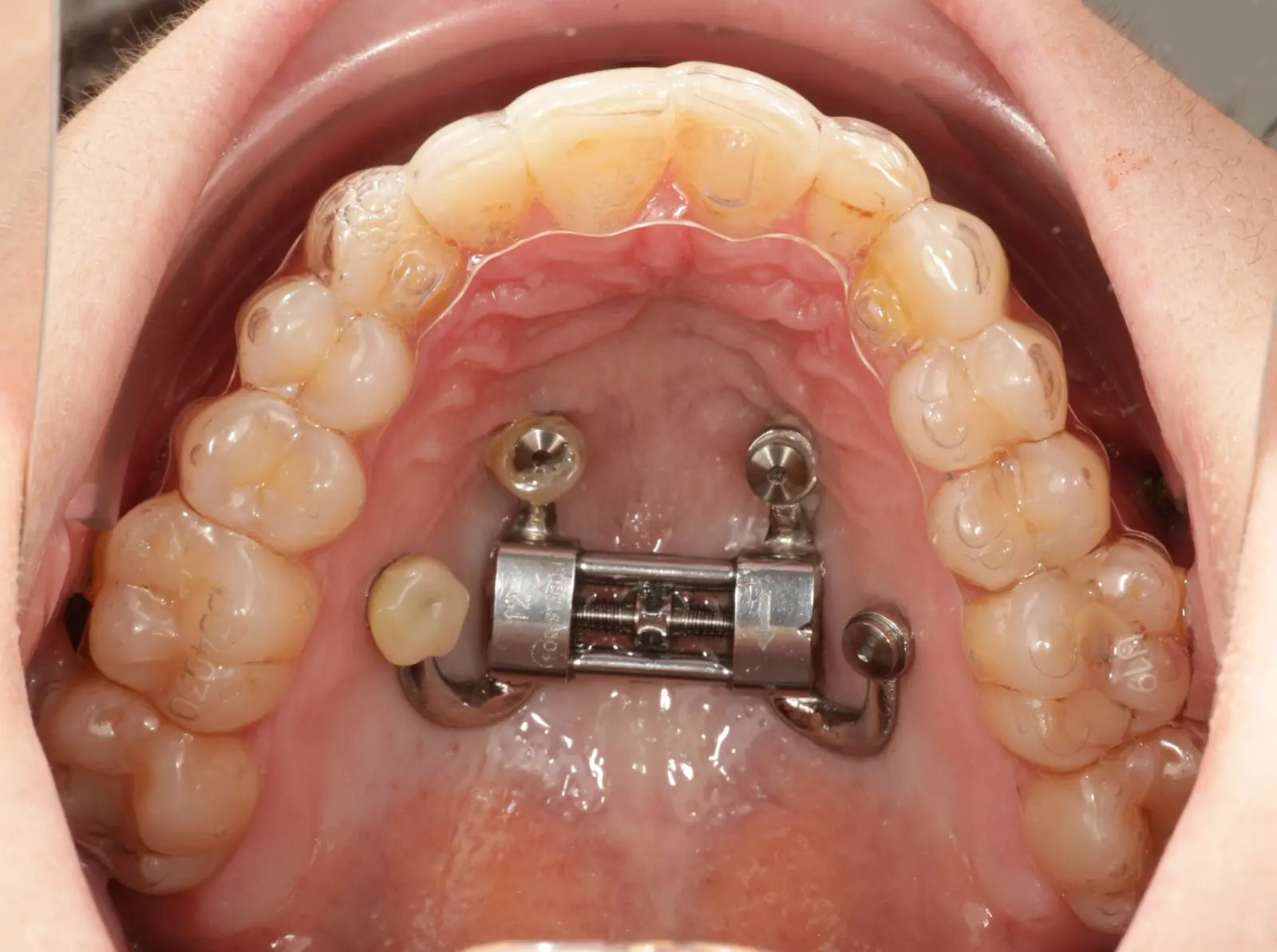
Expand the upper jaw with DOMEzero
For many adults, a narrow palate is part of the story. Dr. Buxton often uses DOMEzero, a minimally invasive palatal expansion protocol. For patients who want a removable option, Vivos® appliance therapy may fit. Which path fits depends on your needs and your skeletal structure.
Align with clear aligners
After expansion, clear aligners guide your teeth into place while preserving the new space for airflow: Spark aligners with DOMEzero, or AIRTHO airway-oriented aligners with MASPE+.
Soft palate laser, if needed
Many plans finish with QuietNite, a non-invasive laser treatment designed to tighten soft palate tissue, which may help reduce snoring.
Why DOMEzero sits at the center of our adult care
The roof of your mouth is the floor of your nose. When the upper jaw is narrow, the nasal airway above it can be narrow too, and the tongue can sit lower and farther back. Widening the upper jaw is designed to create more room for both.
DOMEzero is the adult expansion protocol Dr. Buxton uses. It pairs minimally invasive palatal expansion with Spark clear aligners. Activation is slow and gradual, and the aligners manage your front teeth along the way, so many patients avoid the large gap between the front teeth that traditional MARPE can create.
- Bone-anchored expansion designed for adult jaws
- Synchronized with clear aligners from the start
- Planned from your 3D scans and sleep data
- Paired with myofunctional therapy when tongue and breathing habits need retraining
Not ready for expansion, or want nightly support right away? A custom oral appliance or one of our other CPAP alternatives may be a good fit, always in coordination with your sleep physician.
Hear it from Dr. Buxton
Short videos from Dr. Jeff Buxton. Educational only; every patient is different.
What is actually causing your airway to collapse? Because until you answer that question, you're not solving the problem. You're just managing it. Most people who are diagnosed with sleep apnea or breathing problems get handed a CPAP machine and sent home. But nobody asks the most important question. Why is this happening in the first place?
At our practice, before we recommend any treatment, we do three things. First, we review your sleep data. not just your AHI score. Second, we take an airway CBCT, a 3D scan that shows us exactly where your airway is restricted. Third, we do an assessment of your muscles and TMJ. We look at your tongue posture and your breathing habits.
Only after all three of those assessments do we sit down with you and say, here is what is actually going on. For most patients, we find the same underlying problems. The jaw is too narrow, so the tongue falls back. The airway collapses. That's an anatomy problem, and anatomy can be changed.
How many people have got to have a coffee to start out their day or some type of caffeinated beverage. When I was a kid, we had a Coke and a Coke had like 50 milligrams of caffeine. Today, you walk into a gas station to grab a drink. It's like 300 milligrams of caffeine, like six times more.
Why do we need that? It's actually super interesting, right? As we wake up in the morning, if we're not feeling alert, we need that caffeine. And then we consume that caffeine throughout the day. It's creating this negative spiral, right? It's affecting our sleep for the night already in the morning. How that is working is that we actually have something that is called adenosine and it builds up throughout the day.
It prepares us to fall asleep, but the caffeine delays that buildup. It can affect our ability to fall asleep at night and to get good quality sleep. And so if we're not getting good quality sleep, that buildup of adenosine doesn't reset in the night. And so we wake up in the morning feeling tired.
Now we need another coffee. We need a Monster, a Red Bull, to get through the day. If you think about each day, that building on it on each day, you're just going to constantly feel tired and fatigued. If you're feeling fatigued all the time, probably important to get a sleep screening, a sleep test, talk to your doctor, talk to your dentist. It's an important thing.
Most of us have heard the song, it's raining, it's pouring, the old man is snoring. We grow up thinking that when we become old men, we're going to snore, right? Our grandpa snored, our dads maybe snored. We kind of thought it was endearing and cute, but I'm here to tell you, not endearing or cute.
In fact, it's a sign of underlying health issues. In fact, some of you probably have heard of obstructive sleep apnea. The starting point for obstructive sleep apnea can often be snoring. The other one is upper airway resistance syndrome, but the two are highly related. In fact, when we snore, most of the time it's related to our mouth breathing.
In fact, mouth breathing and snoring is bidirectional. The more we mouth breathe, the more we snore. And the more we snore, the more likely we are to mouth breathe. So an interesting exercise you can do at home is you can keep your lips together, breathe through your nose and try to snore. It's extremely difficult to do.
But then after that, let's have you open your mouth, breathe in and try to snore. And you find that it's very easy to do. So snoring is not something that we want to be doing. In fact, if you or your spouse is snoring, it's time to maybe do a sleep screening and find out what's happening at night and what's happening with your breathing.
What patients and families say
Real Google reviews from our Draper office, Dr. Buxton's patients, and Toothpillow families. Individual experiences; every airway is different.
"Dr. Buxton really cares about his patients. I couldn't be happier with the results! ... Not to mention the new office and decor are absolutely stunning. Everyone in the office is so friendly!"
"Love this place so much! They Have helped me with my kids but also myself. AMAZING!!!"
"When my prior dentist retired, he referred me to Buxton Dentistry. So far it's been great."
Frequently asked questions
Can a dentist treat sleep apnea?
A physician diagnoses obstructive sleep apnea through sleep testing. A dentist with airway training, like Dr. Buxton, can treat the structural side: the jaws, palate, tongue space, and oral airway. We work in coordination with your sleep results and your physician so your care stays connected.
Do I need a sleep test before my consultation?
Most adults start with one. You can order our at-home sleep ring or bring results from a previous sleep study. Your sleep data helps Dr. Buxton decide which steps make sense for you.
I already use a CPAP. Should I stop?
Please don't stop or change your CPAP use on your own. CPAP works well for many people. If you're struggling with it, we can talk about other approaches, and any change happens with your physician's guidance.
What is DOMEzero?
DOMEzero is a minimally invasive adult palatal expansion protocol synchronized with clear aligners. Slow, gradual activation and aligner control of the front teeth help many patients avoid the large front-tooth gap common with traditional MARPE.
How long does adult airway treatment take?
It depends on your anatomy, your sleep results, and which steps your plan includes. Dr. Buxton will walk you through a realistic timeline at your airway consultation.
Is there a sleep apnea dentist near Salt Lake City?
Toothpillow Breathing & Sleep Center is at 14203 Minuteman Drive #101 in Draper, an easy drive from Salt Lake City, Sandy, South Jordan, and the rest of the valley. Call (801) 893-0234 to book an airway consultation.
Treatments that often go together
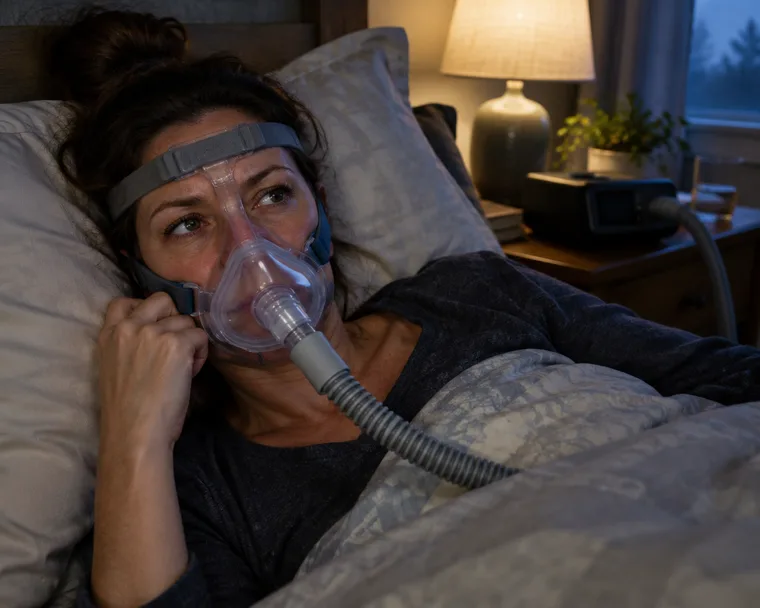
CPAP Alternatives
If the CPAP is sitting in a drawer, you have options worth exploring, in coordination with your physician.
Learn more →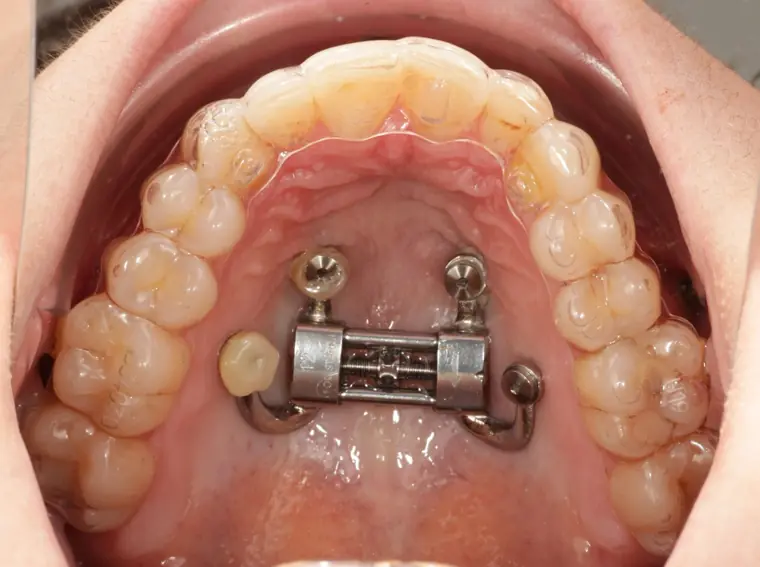
DOMEzero Expansion
Adult palate expansion paired with clear aligners from day one, designed to widen the upper jaw without the big front-tooth gap.
Learn more →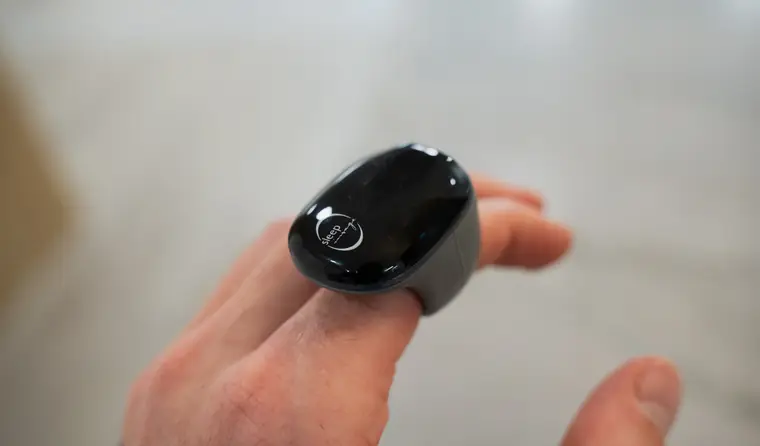
At-Home Sleep Test
A small ring you wear for a night in your own bed. The simple first step for most adults, reviewed with Dr. Buxton.
Learn more →Schedule your airway consultation
Book online or call. Consultations for kids, teens, and adults at our Draper office.
14203 Minuteman Drive #101
Draper, UT 84020
Just off I-15, minutes from IKEA
Monday to Friday, 9 AM to 5 PM
"Great place! They are doing it differently. Well done!"
Request Your Airway Consultation
Tell us a little about what's going on. Our team will call you to find a time that works. No pressure, just answers.